
Why Open Enrollment Isn’t Really “Over” Yet

When Open Enrollment closes, there’s a collective exhale across HR teams everywhere. Deadlines are met. Elections are submitted. The inbox finally quiets down.
It feels like the finish line.
But in reality, Open Enrollment closing up isn’t really the end of the race – it’s the start of game film review.
Because while employees may be done enrolling, they’re not done experiencing the process. And the insight you can gather right now — while it’s still fresh — will shape everything that comes next.
Post–Open Enrollment feedback isn’t busywork. It’s the foundation for a smarter, calmer, more effective OE year ahead.
Month 1: The Reset Button in the Open Enrollment Roadmap
The Open Enrollment Roadmap is built on a simple idea: OE works best when it’s treated as a year-round strategy, not a once-a-year scramble.
Right after OE is where that strategy begins.
This is the moment to:
- Look back before planning forward
- Identify what helped employees feel confident — and what didn’t
- Separate “it worked” from “we survived it”
Skipping this step doesn’t just limit improvement. It all but guarantees the same friction points will show up again next year.
Think of Month 1 like setting your GPS. If the starting coordinates are wrong, every turn after that gets harder.
Why Post-OE Feedback Is Most Valuable Right Now
Timing matters — especially with employee feedback.
When surveys go out weeks or months after Open Enrollment, responses tend to blur. Frustrations soften. Details fade. What you get back is polite, vague, and far less actionable.
But feedback collected shortly after OE closes tells a different story.
Employees still remember:
- Where they hesitated
- What confused them
- When they felt rushed
- What they wished they’d understood better
That immediacy is what makes Month 1 feedback so powerful. It captures the experience, not just the outcome.
The Questions Early Feedback Helps You Answer
Post–Open Enrollment feedback isn’t about chasing perfect satisfaction scores. It’s about understanding where the experience broke down — even briefly.
The most useful feedback helps HR teams answer questions like:
- Where did employees lose confidence in their decisions?
- Which communications clarified things — and which created noise?
- Where did employees get stuck or second-guess themselves?
- What generated repeat questions or last-minute panic?
- Which tools felt intuitive, and which felt like work?
These insights don’t just explain what happened last OE. They inform how you approach:
- Goal-setting in Month 2
- Technology assessments in Month 7
- Pre-enrollment communication in Month 8
- Engagement strategies in Month 11
In other words, Month 1 feedback fuels the entire roadmap.
Reading Between the Lines of Employee Feedback
Employees don’t always spell things out directly — but patterns tell the story.
“It Was Fine” Usually Means “I Powered Through It”
Neutral responses aren’t a win. More often, they point to cognitive overload. Employees may have completed enrollment, but not confidently.
These are the same employees most likely to regret their choices later — once real-life usage begins.
Confusion Is a Communication Problem, Not an Employee Problem
When feedback mentions unclear options or too much information, it’s rarely about capability. It’s about delivery.
Messages sent too late, all at once, or buried in long emails create stress — not understanding. This is where year-round communication tools like Selerix Engage can help shift OE from an information dump to an ongoing conversation.
Friction Signals Process Gaps
Navigation issues, difficulty comparing plans, or uncertainty during elections point to workflow problems — not “user error.”
An enrollment platform like BenSelect is designed to reduce that friction by guiding employees step-by-step, so confidence replaces guesswork.
Common Mistakes Teams Make After Collecting Feedback
Many organizations do the hard part — collecting feedback — and then miss the opportunity it creates.
Common pitfalls include:
- Treating feedback as a wrap-up task instead of a planning input
- Fixating on scores instead of recurring themes
- Trying to fix everything at once
- Failing to connect feedback to future OE milestones
Month 1 feedback doesn’t need to spark a complete overhaul. It needs to create focus.
Turning Month 1 Feedback Into Action (Without Overwhelming Your Team)
The goal of Month 1 isn’t perfection. It’s direction.
A practical approach looks like this:
- Collect feedback quickly, while experiences are fresh
- Identify 3–5 consistent themes across responses
- Prioritize changes that will have the biggest impact
- Document insights to guide roadmap planning
- Share what you learned — and what’s changing
Even small adjustments made early can dramatically improve the next Open Enrollment experience.
Start Month 1 With the Right Tool
Make Month 1 Count With the Post–Open Enrollment Feedback Toolkit
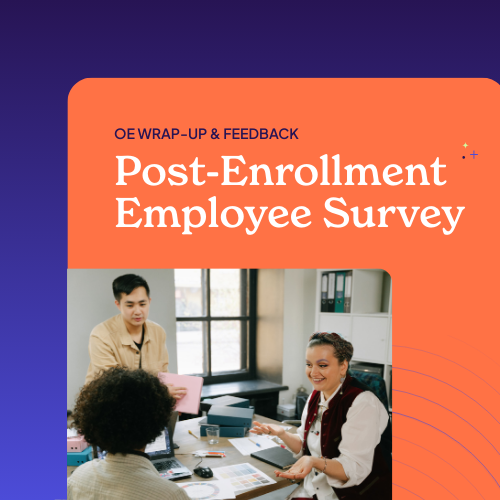
To help HR teams make the most of Month 1, we created a Post–Open Enrollment Feedback Toolkit designed specifically for this phase of the Open Enrollment Roadmap.
Inside, you’ll find:
- A ready-to-use employee feedback survey template
- Best practices for timing, anonymity, and distribution
- Guidance on analyzing results and spotting patterns
- A structured way to turn insight into action
It’s built to save time, boost participation, and help you move from “we asked” to “we improved.”
Download the Post–Open Enrollment Feedback Toolkit
Better Open Enrollment Starts With Listening Early
Great Open Enrollment experiences don’t start with launch emails or enrollment deadlines.
They start months earlier — with listening.
Month 1 is your opportunity to reset, refocus, and build a benefits experience that feels intentional instead of reactive. When employee feedback shapes your roadmap from the start, everything that follows becomes clearer, calmer, and more effective.
Because the best Open Enrollment improvements don’t happen during enrollment.
They start right after it ends.


