
The IRS Letter You Don’t Want to Open: What Triggers 226J and How to Avoid It

ACA filing season is wrapping up. The forms are submitted. The team can finally breathe.
Then one day, a letter arrives from the IRS.
Not a friendly reminder.
Not a routine notice.
It’s Letter 226J.
For many HR and benefits teams, this letter is the moment ACA compliance becomes very real. It proposes an Employer Shared Responsibility Payment (ESRP) penalty under the ACA employer mandate—often based on reporting errors, affordability issues, or missing coverage offers.
The frustrating part? These letters often arrive months or even years after the original filing, when the data behind the forms is harder to track down.
The good news is that most 226J letters don’t come out of nowhere. They are usually the result of a few common issues—and with the right processes in place, they are fully preventable.
Let’s walk through what Letter 226J means, what triggers it, and how employers can reduce the risk of opening that dreaded penalty letter.
What Is IRS Letter 226J?
Letter 226J is the IRS’s initial notice proposing a penalty under the ACA employer mandate.
It typically means the IRS believes that:
- At least one full-time employee received subsidized Marketplace coverage, and
- The employer did not meet the ACA requirements for offering affordable, minimum-value coverage.
The IRS determines this using the data reported on Forms 1094-C and 1095-C, combined with information from employees’ tax returns and Marketplace enrollment data.
The letter usually includes:
- A proposed penalty amount
- A monthly breakdown of potential liability
- A list of employees who received Marketplace subsidies
- Instructions and response forms for the employer
Importantly, this notice does not automatically mean the penalty is final. Employers have the opportunity to respond, provide additional documentation, or dispute the findings.
Still, receiving one is rarely a pleasant surprise.
Why Employers Receive Letter 226J
In most cases, the IRS is responding to a gap between the coverage reported on ACA forms and what employees reported on their tax filings.
Three situations commonly trigger a 226J letter.
1. Coverage Wasn’t Offered to Enough Full-Time Employees
Under the ACA employer mandate, applicable large employers (ALEs) must offer minimum essential coverage to at least 95% of full-time employees and their dependents.
If an employer falls below that threshold and even one employee receives subsidized Marketplace coverage, the employer may face the 4980H(a) penalty, sometimes called the “no coverage” penalty.
Here’s a scenario HR teams often recognize:
Sarah, an HR director for a retail company, manages a workforce with fluctuating hours. Some employees were mistakenly categorized as part-time due to inconsistent payroll records. In reality, a handful qualified as full-time under ACA rules.
When those employees later enrolled in subsidized Marketplace coverage, the IRS flagged the employer for potentially failing the 95% coverage requirement.
Situations like this highlight why accurate employee classification and eligibility tracking are essential throughout the year—not just during filing season. Reviewing your ACA reporting process, compliance is built on year-round tracking of employee status, not just the final forms.

Watch Now: Avoiding ACA Penalties:
Understanding ACA Reporting Mistakes and
the Different Types of IRS Penalty Letter
2. Coverage Was Offered—But Wasn’t Affordable
Sometimes employers do offer coverage, but the IRS still proposes a penalty.
Why?
Because the coverage may not meet the ACA’s affordability threshold.
Under the employer mandate, coverage must be affordable based on IRS-defined limits tied to employee income. If the employee’s required premium contribution exceeds those limits, the coverage may be considered unaffordable.
Consider another familiar example:
Marco, a benefits manager for a manufacturing company, offered a compliant health plan to employees. But rising healthcare costs pushed employee premium contributions higher than expected. A few employees opted for Marketplace coverage instead—and qualified for subsidies.
From the IRS perspective, the employer offered coverage, but it did not meet affordability standards.
Affordability calculations often hinge on the data reported on Form 1095-C, particularly the information captured in Lines 14, 15, and 16. Those fields explain what coverage was offered, what it cost, and why a penalty may or may not apply—which is why it is crucial to fully understand ACA 1095-C reporting codes.
Small coding errors or incorrect premium calculations can quickly lead to compliance issues.

ACA Codes Cheat Sheet
What Every Employer Needs to Know
3. ACA Reporting Errors or Data Mismatches
In many cases, the coverage itself isn’t the problem.
The problem is the data behind the reporting.
ACA compliance requires several systems to work together, including payroll, HRIS, benefits administration, and sometimes COBRA vendors. If those systems don’t align, errors can appear on the reporting forms.
Common reporting issues include:
- Incorrect 1095-C codes
- Missing employee records
- SSN or TIN mismatches
- Incorrect coverage months
- Eligibility data that doesn’t match payroll records
Because the IRS compares employer filings with employee tax filings and Marketplace data, inconsistencies can quickly trigger questions.
This is one reason many organizations are recognizing that ACA compliance is fundamentally a data management challenge, not just a filing task.
ACA Compliance is a Data Problem
What You Should be Doing Year-Round
Why 226J Letters Often Catch Employers Off Guard
One of the most frustrating aspects of ACA enforcement is timing.
IRS enforcement typically begins well after the reporting year.
For example, enforcement for the 2023 reporting year began in 2025.
By the time the letter arrives:
- HR staff may have changed
- systems may have migrated
- historical data may be harder to locate
Without organized records and clear reporting logic, responding to the letter can feel like reconstructing a puzzle from two years ago.
How Employers Can Reduce the Risk
Avoiding ACA penalties rarely comes down to one decision.
Instead, it’s usually the result of a consistent process that keeps eligibility tracking, coverage offers, and reporting data aligned.
Here are four practices that make the biggest difference.
Track eligibility year-round
ACA reporting doesn’t start in January. Employers need to monitor employee hours, measurement periods, and eligibility status throughout the year.
Align payroll, HRIS, and benefits systems
Many ACA penalties trace back to mismatched data between systems. Regular reconciliation helps prevent surprises during reporting. Enable your teams by having the right tool for the job.

How to Choose the Right Software for HR Teams
What works best for ACA Compliance?
Review forms before filing
Running draft forms and reviewing unusual coverage codes or missing information can catch errors before they reach the IRS.
Maintain documentation
Keeping records of coverage offers, affordability calculations, and eligibility decisions helps employers respond confidently if the IRS asks questions.
These proactive steps are why many HR leaders treat ACA compliance as a strategic risk issue rather than just an annual filing requirement—giving the right framing to company decision makers on the importance of seeing ACA compliance as a business risk.
How to Talk to C-Suite About ACA Compliance
What they should know and how to frame it.
If You Receive Letter 226J
Receiving a 226J letter doesn’t mean the penalty is inevitable.
Employers can respond by:
- agreeing with the proposed penalty
- disputing all or part of it
- providing additional documentation to support their filings
The key is responding promptly and with clear documentation.
In many cases, penalties are reduced or eliminated once the underlying reporting data is reviewed.

Penalty Letter Playbook
What to do about receiving one and how to navigate it.
ACA Compliance Is Really About Process
For most employers, ACA penalties don’t happen because someone intentionally ignored the rules.
They happen because data, systems, and reporting processes fall out of sync.
When eligibility tracking, coverage offers, and reporting systems align, ACA compliance becomes far more predictable—and IRS letters become far less likely.
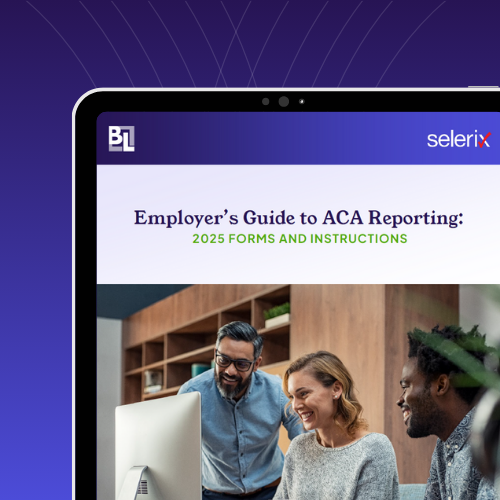
You can download our full guide for 2025 filing season here:
Because the best ACA strategy isn’t scrambling after the IRS sends a letter.
It’s building a process where that letter never arrives in the first place.
If you are looking for a partner to help you keep your ACA compliance in check, Selerix offers full service, self service and more options to help you stay ahead. Let us do the compliance work so you can focus on what matters, your employees.


