
Your Best Benefits Are Only as Good as Your Worst Explanation

You can negotiate competitive plans.
You can add new benefits employees ask for.
You can even invest in decision tools and platforms.
And still—your benefits can fail.
Not loudly. Not obviously. But quietly, in the moments where employees hesitate, guess, or give up because they’re not sure what to do next.
Our latest research shows that benefits don’t break at plan design. They break at explanation.
And the weakest explanation in your benefits ecosystem sets the ceiling for trust, confidence, and utilization—no matter how strong the offering itself is.
When Benefits Are Confusing, the Costs Are Real
Benefits confusion isn’t just frustrating. It’s expensive.
According to the 2025 Selerix Employee Benefits Survey:
- Only 27% of employees say they understand their benefits perfectly
- 1 in 3 employees regret a benefits decision
- 39% delayed or skipped medical care because they weren’t sure what their plan would cover
- 21% missed work to deal with a benefits-related issue
- 1 in 10 say benefits stress distracts them at work all the time
These aren’t edge cases. They’re signals.
Employees aren’t failing to engage with benefits because they don’t care. They’re disengaging because they don’t feel confident—and confusion shows up everywhere: delayed care, missed work, lower trust, and lingering regret.
The Confidence Gap Is a Communication Gap
In Closing the Confidence Gap, one theme comes through clearly:
confidence is the missing ingredient in most benefits experiences.
When communication fails, employees don’t just misunderstand their benefits—they lose confidence in the process and in the people behind it. They rush decisions. They second-guess themselves. Or they disengage entirely.
And that confidence gap doesn’t stay contained to open enrollment.
It affects:
- Whether employees actually use their benefits
- Whether they trust their employer
- Whether they feel supported—or left on their own
In fact, our research shows employees who are satisfied with their benefits are 5x more likely to stay and 3.5x more likely to trust their employer. Confidence isn’t a “nice to have.” It’s a driver of retention and loyalty.
The Worst Explanation Is Usually Invisible
Here’s the tricky part: the explanation that undermines your benefits strategy is rarely the one you’re focused on.
It’s not the 40-page plan document. Everyone expects that to be dense.
It’s the smaller breakdowns:
- The email that explains what changed but not what to do
- The reminder that assumes employees already understand their options
- The generic message sent to everyone, regardless of life stage or coverage
- The one-time announcement that’s never reinforced
Our data shows that 51% of employees only take action when information feels personal, and nearly 1 in 3 ignored an open enrollment message because it didn’t feel relevant.
Employees don’t need more messages.
They need fewer explanations that actually stick.
The Three Questions Every Benefits Message Must Answer
Across all our research, confident benefits communication consistently answers three silent questions employees are always asking:
- Is this for me?
- What should I do right now?
- Will I be okay if I do it?
When a message answers all three, confidence follows.
When it doesn’t, employees hesitate—or ignore it altogether.
This is where many benefits communications fall short. They explain the policy, the deadline, or the rule… but not the reassurance. Not the clarity. Not the next step in plain language.
Good benefits communication feels less like marketing and more like guidance.
Open Enrollment Exposes the Weakest Link
If you want to see where explanations break down, look at open enrollment.
Most employees:
- Spend less than an hour reviewing options
- Make decisions at home, alone
- Rarely use decision-support tools (only 16% do)
- Are trying to make complex financial and health decisions quickly
In that compressed window, clarity matters more than creativity.
When explanations are unclear, employees default to:
- Last year’s choice
- The cheapest option
- Or a rushed decision they later regret
Open enrollment doesn’t create confusion—it reveals it.
What Actually Improves Benefits Communication (and What Doesn’t)
The research is clear about what works:
- Say less, more clearly
- Repeat key actions across channels
- Personalize by moment, not by title
- Focus on education over clever copy
In fact, 44% of employees prefer benefits communication that’s educational and detailed, more than any other tone or style. Deadline reminders and personalized information drive far more action than flashy campaigns or generic announcements.
For HR teams, this means communication strategy deserves as much planning as plan design.
For brokers, it’s an opportunity to deliver value far beyond renewal—by helping clients fix the experience, not just the package.
Fix the Explanation, Unlock the Value
Here’s the hard truth:
one unclear explanation can undo thousands of dollars in benefits spend.
But the good news is this problem is fixable.
When organizations focus on clarity, relevance, and repetition, benefits stop feeling like paperwork—and start feeling like support. Confidence grows. Regret drops. Trust builds.
Because in the end, benefits don’t succeed because they’re generous.
They succeed because employees understand them.
Ready to Close the Confidence Gap?
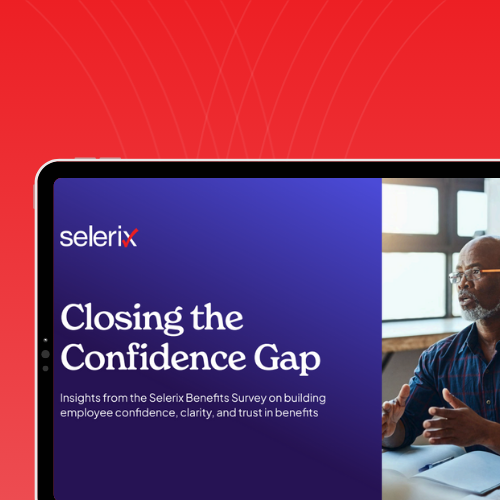
If you want practical, research-backed guidance on how to turn benefits communication into confidence—before, during, and after open enrollment—we’ve laid it all out for you.
Inside, you’ll find:
- Clear do’s and don’ts for benefits communication
- The exact questions employees need answered to feel confident
- Which channels and message types actually drive action
- A framework for year-round communication that builds trust
Clarity drives confidence. And confidence is what turns benefits into a trusted experience.


