
Managing a Multigenerational Workforce in Education: 5 Benefits Communication Challenges HR Leaders Can’t Ignore

Walk into almost any school district, college, or educational institution today and you’ll find one of the most diverse workforces in America—not in terms of job titles, but generations.
A first-year teacher fresh out of college may be sitting beside a veteran educator preparing for retirement. A millennial principal managing young children at home may share a benefits guide with a Gen X facilities manager focused on retirement savings. Support staff, transportation teams, food service workers, adjunct faculty, and administrators all bring different experiences, priorities, and communication preferences to the table.
For HR leaders in education, that creates a unique challenge.
How do you communicate complex benefits information to employees who are at completely different life stages, consume information differently, and have varying levels of benefits knowledge?
The answer isn’t creating five separate benefits programs. It’s creating a communication strategy that helps every employee understand and confidently use the benefits available to them.
Recent findings from Selerix’s Generations in the Workplace: The Benefits Communications Playbook reveal that while generations may differ in how they engage with benefits information, they share one common need: clarity.
Why Education Faces Unique Benefits Communication Challenges
Education has always been a people-first industry. But it’s also an industry where employee populations tend to span decades.
Unlike many organizations that skew younger or older, educational institutions often employ workers from Gen Z through Baby Boomers simultaneously. Many employees spend entire careers in education, creating a workforce where new hires and long-tenured employees work side-by-side every day.
That diversity is a strength.
But when open enrollment arrives, it can also create communication challenges.
The same email that resonates with a first-year teacher may not connect with a veteran administrator. The printed guide some employees appreciate may never be opened by others. The webinar one employee finds helpful may be skipped entirely by someone who simply wants a quick text reminder.
For HR teams already balancing staffing shortages, compliance requirements, employee relations, and budget pressures, benefits communication can quickly become another complicated lesson plan.
Challenge #1: One Message Doesn’t Reach Everyone
Many education organizations still rely heavily on district-wide emails, intranet announcements, and benefits guides.
Those channels remain important. In fact, email continues to be the primary way employees consume benefits information.
But communication preferences become more varied after that. Some employees prefer text reminders. Others want a dedicated benefits website they can revisit when questions arise. Some still appreciate printed materials they can review at home with a spouse or partner.
Think of benefits communication like classroom instructions: Most educators understand that students learn differently. Some need visuals. Some prefer discussion. Others learn best through hands-on experience.
Employees aren’t much different.
The most successful benefits communication strategies use email as the foundation while reinforcing key messages through multiple channels. The goal isn’t more communication—it’s making important information accessible in the formats employees already use.
Challenge #2: Employees Are Making Important Decisions Faster Than Ever
HR teams often spend months preparing for open enrollment.
Employees, meanwhile, are making benefits decisions surprisingly quickly.
According to Selerix survey data, 70% of employees spend an hour or less reviewing benefits options during enrollment.
For education employees, that’s not surprising. Teachers are balancing lesson planning, grading, parent communication, and extracurricular responsibilities. Administrators are managing staffing challenges and operational priorities. Support staff are focused on serving students and keeping schools running. Benefits enrollment frequently becomes one more task squeezed into an already packed schedule.
The challenge isn’t necessarily a lack of information. It’s helping employees find the information most relevant to them before decision fatigue sets in.
Instead of overwhelming employees with every possible detail upfront, effective communication focuses on answering three questions:
- What’s changing?
- What does it mean for me?
- What do I need to do next?
When employees can quickly understand those answers, they’re more likely to make informed decisions and less likely to experience enrollment regret later.
Challenge #3: Younger Employees Often Need More Guidance Than HR Teams Realize
Every year, education organizations welcome new teachers, staff members, and administrators into the workforce.
For many of them, open enrollment isn’t just a benefits decision. It’s their first benefits decision.
Health plans, HSAs, disability coverage, supplemental benefits, retirement contributions, ACA eligibility—these concepts can feel overwhelming for employees who have never navigated them before.
Research consistently shows younger employees report lower confidence in their understanding of benefits and are more likely to regret enrollment choices. That’s not because they’re disengaged. It’s because they’re learning an entirely new language.
Imagine asking a student to take a final exam before attending the class.
That’s often what benefits enrollment feels like for newer employees.
Education HR teams have an opportunity to bridge that gap by treating benefits communication as education, not administration. Short explainers, decision-support tools, FAQs, and step-by-step guidance can dramatically improve confidence and understanding. The goal isn’t to make employees benefits experts. It’s to help them make decisions they feel confident about.
Challenge #4: Information Overload Is Competing for Attention
Education employees receive a lot of communication.
Staff updates.
Compliance notices.
Policy changes.
Safety alerts.
Parent communications.
Professional development opportunities.
Meeting reminders.
Benefits communications are competing with all of it.
The challenge isn’t necessarily that employees don’t care about benefits. It’s that they are filtering information. When benefits messages feel irrelevant, untimely, or difficult to understand, they quickly get lost among dozens of competing priorities.
Think of the faculty lounge bulletin board.
At the beginning of the year, everyone notices it. By October, it’s covered with so many flyers and announcements that even important messages become invisible. The same thing happens digitally.
The solution isn’t sending more messages. It’s sending fewer, more relevant ones. Communications that clearly identify who they apply to, what action is needed, and why it matters consistently perform better than generic organization-wide announcements.
Challenge #5: Enrollment Is Not the Finish Line
Many HR teams treat open enrollment like graduation day.
Employees enroll. The process ends. Everyone moves on.
In reality, enrollment is more like the first day of class. The real learning happens afterward. Questions begin when employees need care, use a benefits account, add a dependent, file a claim, or search for a provider. Unfortunately, many employees leave enrollment still unsure what comes next.
As a result, HR teams often become the unofficial help desk for questions that could have been addressed proactively.
The most effective organizations create a “what happens next” experience that extends benefits education throughout the year.
That may include:
- New hire education campaigns
- HSA and FSA usage tips
- Provider search guidance
- Benefits FAQs
- Life-event communications
- Post-enrollment checklists
When employees know where to go and what to do after enrollment, HR teams spend less time responding to repetitive questions and more time focusing on strategic priorities.
What Education HR Leaders Can Do Next
Managing a multigenerational workforce doesn’t require reinventing benefits administration. It requires meeting employees where they are.
A few practical steps can make a significant difference:
Use Email as Your Foundation—But Not Your Only Channel
Email remains the most universal communication tool. Use it as the backbone of your strategy while reinforcing important messages through text reminders, benefits websites, printed materials, and live support opportunities.
Make Communications More Relevant
Segment messages whenever possible. Employees are far more likely to engage when communications clearly apply to their situation.
Strengthen Decision Support
Benefits education shouldn’t end with a PDF guide. Interactive tools, personalized recommendations, and guided enrollment experiences help employees make better decisions with greater confidence.
Create a Year-Round Communication Plan
Benefits communication shouldn’t be limited to open enrollment season. Ongoing education helps employees understand and fully utilize the benefits available to them.
Focus on Clarity Over Creativity
Employees consistently tell us they prefer educational, detailed communication over clever marketing campaigns. Clear guidance beats clever copy every time.
The Opportunity Ahead
Education professionals spend their careers helping others learn, grow, and succeed. The same philosophy applies to benefits communication.
When employees understand their benefits, they’re more confident in their decisions. They feel more supported by their employer. They make better use of the programs available to them. And HR teams spend less time putting out fires and more time creating positive employee experiences.
A multigenerational workforce doesn’t have to make benefits communication harder. With the right strategy, it can become an opportunity to create more personalized, effective, and meaningful employee experiences for everyone.
Want More Insights?
The challenges facing education HR teams aren’t unique—and neither are the opportunities.
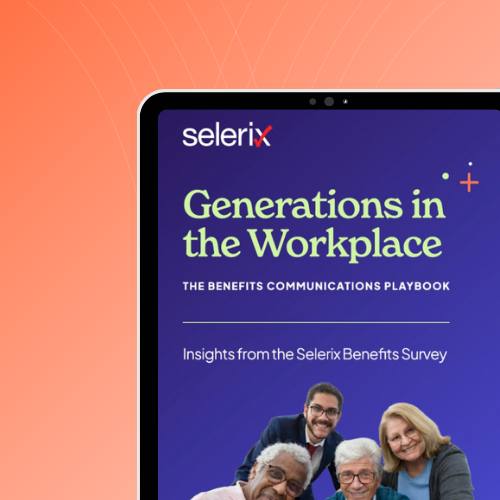
Download our free ebook, Generations in the Workplace: The Benefits Communications Playbook, to explore the latest research on how different generations engage with benefits communications, where communication gaps exist, and five practical strategies for improving employee engagement before, during, and after open enrollment.
How Selerix Helps
At Selerix, we help employers simplify benefits communication across diverse workforces through benefits administration, employee communications, decision support, and personalized engagement tools designed to make benefits easier to understand and easier to use.
Because the best benefits strategy isn’t just about enrollment. It’s about helping every employee—from first-year teachers to veteran educators—feel confident in the choices they make.


