
Confused Employees Aren’t the Problem. Confusing Experiences Are.

Every Open Enrollment season begins with the best intentions.
Months before employees ever log in to make their benefits elections, HR teams are already hard at work behind the scenes. Plans are reviewed, carrier changes are finalized, enrollment platforms are tested, compliance deadlines are tracked, communication calendars are built, and educational resources are prepared. By the time enrollment opens, countless hours have gone into making sure employees have everything they need to make informed decisions.
Yet despite all that preparation, the same challenge continues to surface year after year. According to the Selerix Employee Benefits Survey, only one in four employees say they truly understand their benefits, while one-third regret the choices they made during Open Enrollment. Those numbers suggest the issue isn’t whether benefits matter to employees; it’s whether the enrollment experience gives them the confidence to make informed decisions in the first place.
That distinction matters because it changes how we define the problem. Too often, organizations assume employees simply need more education or more resources. In reality, employees rarely need to become benefits experts. They need an enrollment experience that helps them understand their options, take the next step with confidence, and make informed decisions without feeling overwhelmed. When the goal shifts from delivering information to building confidence, the entire enrollment strategy starts to look different.
Anyone who has supported Open Enrollment has seen what that uncertainty looks like.
- “What’s different this year?”
- “Which plan should I choose?”
- “Do I need to enroll if I want to keep my current benefits?”
- “Can you explain what an HSA is again?”
After answering these questions for the tenth, or hundredth time, it’s understandable why some HR professionals begin to wonder whether employees are reading the emails, attending the webinars, or using the resources that have been carefully prepared for them. But that question may be pointing us in the wrong direction.
Instead of asking why employees seem confused every Open Enrollment season, perhaps the better question is whether the enrollment experience itself is creating unnecessary confusion. It’s a subtle shift in perspective, but an important one. When organizations stop viewing confusion as an employee problem and start viewing it as an experience problem, they begin uncovering opportunities to improve the process instead of simply repeating it.
Why Employees Feel Confused During Open Enrollment
One of the biggest challenges with Open Enrollment is that HR professionals and employees experience it from completely different perspectives.
For HR, benefits are part of the job every day. Months are spent reviewing plan designs, coordinating with carriers and brokers, discussing compliance requirements, analyzing utilization data, and preparing communications. By the time enrollment begins, terms like deductibles, out-of-pocket maximums, HSAs, COBRA, and voluntary benefits have become second nature. Employees, on the other hand, think about their benefits only a few times each year—and for many, Open Enrollment is the biggest of those moments.
They’re being asked to compare medical plans, understand payroll deductions, evaluate life insurance coverage, decide whether to contribute to an HSA or FSA, and consider voluntary benefits that could affect their family’s financial security—all while balancing work responsibilities, family schedules, and the dozens of other decisions that compete for their attention every day.
Imagine walking into a home improvement store with a list of supplies for a project you’ve never attempted before. Somewhere on the shelves are all the right materials, but every aisle introduces new terminology, unfamiliar products, and dozens of decisions that feel increasingly important. The store isn’t intentionally difficult to navigate, but without context or guidance, it’s easy to second-guess every choice. That’s remarkably similar to how Open Enrollment can feel for employees.
Their confusion isn’t evidence that employees don’t care about their benefits. More often, it’s the natural result of asking someone to make complex decisions in an unfamiliar environment where the stakes feel high and the information feels endless. Employees don’t need to become benefits experts. They need an experience that helps them make confident benefits decisions.
Why More Information Doesn’t Always Create More Clarity
When employees have questions, the instinctive response is often to provide more information. It’s a logical reaction. If people don’t understand something, surely another email, another FAQ, another webinar, or another enrollment guide will help fill the gaps. Sometimes it does. But just as often, it creates another challenge: information overload.
Think about what the typical employee experiences during the weeks leading up to Open Enrollment. They may receive announcements about upcoming enrollment dates, reminders about plan changes, invitations to educational sessions, instructions for dependent verification, links to enrollment guides, explanations of voluntary benefits, and deadline notifications. Every communication has a purpose, and every one was created with good intentions.
The problem is that employees don’t consume these messages in isolation. They’re arriving between meetings, alongside project updates, customer emails, calendar invitations, and everything else demanding attention throughout the workday. By the time an employee finally sits down to enroll, they’re not trying to remember one email; they’re trying to piece together several weeks’ worth of information while making decisions that will affect their healthcare and finances for the coming year. That’s a difficult task for anyone.
The issue isn’t that HR communicates too much. It’s that employees often receive more information than they can comfortably organize in the moments when they’re actually making decisions. Every unnecessary email, confusing acronym, or difficult plan comparison introduces what we might call decision friction. Individually, these moments seem small. Together, they create an enrollment experience that feels harder than it needs to be. Reducing that friction is often one of the fastest ways to help employees make more confident benefits decisions.
HR Quick Win
Put every enrollment communication through the Three-Question Test.
Before sending an email, guide, or reminder, ask:
- Does this help employees understand something?
- Does it tell them what to do next?
- Does it help them feel more confident taking action?
If the answer to any of those questions is “no,” the communication may be adding information without adding clarity.
How to Reduce Friction During Open Enrollment
Think about the digital experiences people appreciate most.
Whether they’re booking a flight, renewing a driver’s license, or ordering dinner online, the best experiences rarely succeed because they present every possible option upfront. They succeed because they guide people through the process one logical step at a time. The next action is obvious, the information feels relevant, and the experience removes uncertainty instead of adding to it.
Open Enrollment should work the same way.
Rather than asking employees to become temporary benefits experts, organizations can focus on making the experience easier to navigate. That doesn’t necessarily require more communication; it requires more intentional communication. A side-by-side plan comparison may answer questions more effectively than a ten-page benefits guide. A reminder sent to employees who haven’t started enrollment is more helpful than another organization-wide email. Plain language often does more to improve understanding than another paragraph of insurance terminology.
Personalization plays an important role here as well. Employees at different life stages or different points in the enrollment process don’t have the same questions. A newly hired employee may need foundational education, while a long-time employee may only need to understand what’s changing this year. Delivering the right information at the right time helps employees focus on what matters to them instead of sorting through everything that doesn’t.
When communication feels relevant and timely, employees spend less energy filtering information and more energy making informed decisions. Personalization isn’t simply a communication strategy—it’s one of the most effective ways to reduce complexity without reducing information.
Why Employee Confidence Matters More Than Completion
Many organizations judge the success of Open Enrollment by participation rates.
- Did employees complete enrollment?
- Were elections submitted before the deadline?
- Did everyone finish on time?
Those are certainly important operational metrics, but they don’t tell the whole story.
There’s often a gap between employees completing Open Enrollment and employees feeling confident about the decisions they made. Think of it as a confidence gap. Closing that gap doesn’t require asking employees to know more—it requires creating an experience that helps them feel more certain about the choices they’re making.
An employee can complete Open Enrollment without ever feeling confident in the choices they made. They may stick with last year’s plan because comparing options felt overwhelming. They may skip voluntary benefits because they weren’t sure how they worked. They may rush through enrollment simply because another meeting starts in fifteen minutes.
From a reporting standpoint, enrollment was successful. From the employee’s perspective, it may have felt anything but. That’s why confidence deserves more attention. When employees understand their options and feel supported throughout the enrollment process, they’re more likely to make thoughtful benefits decisions, less likely to regret their selections, and less likely to rely on HR for clarification after enrollment closes. Confidence isn’t just a nice outcome for employees; it often becomes a leading indicator of a smoother Open Enrollment experience overall.
HR Quick Win
Measure confidence—not just completion.
Participation rates tell you who finished Open Enrollment. They don’t tell you whether employees felt confident about the decisions they made.
After enrollment closes, ask one simple question:
“Did you feel confident choosing the benefits that were right for you?”
The answers can reveal opportunities that enrollment metrics alone may never uncover.
How Better Experiences Benefit HR Teams
One of the most rewarding aspects of improving the benefits experience is that HR also has wins.
Clearer communications mean fewer repetitive questions. Simpler decision support means fewer last-minute corrections. Better-timed reminders reduce the number of employees scrambling to complete enrollment on the final day. Every small improvement removes a little friction from the process, and those improvements have a way of compounding over time.
This is where Open Enrollment shifts from being a seasonal project to becoming a year-round process of continuous improvement. Each year provides an opportunity to identify what caused confusion, refine communications, simplify decision-making, and make the next enrollment season just a little easier than the last. Over time, those incremental improvements create an experience that feels more intuitive for employees and more manageable for HR. The goal isn’t perfection overnight, but reducing one point of friction every year. Those small improvements compound over time, creating an enrollment experience that’s easier to navigate, easier to support, and ultimately more effective for everyone involved.
HR Quick Win
Improve one thing every Open Enrollment.
You don’t have to redesign your entire enrollment strategy to improve the employee experience. Maybe it’s simplifying one plan comparison, rewriting one confusing email, or creating one new decision-support resource.
Small improvements are easier to implement, easier to measure, and often have a bigger impact than organizations expect.
Final Thoughts
At its core, Open Enrollment isn’t simply an administrative process; it’s one of the few moments each year when employees are asked to make decisions that directly affect their health, finances, and families. That’s a significant responsibility, and it’s one that deserves an experience built around clarity rather than complexity.
Employees don’t need to become benefits experts to make good decisions. They need an enrollment experience that helps them understand their options, builds confidence in their choices, and makes taking action feel straightforward instead of overwhelming.
At its best, Open Enrollment isn’t about delivering more information—it’s about designing an experience that helps employees make confident benefits decisions. When organizations focus on reducing decision friction instead of simply adding more resources, employees feel more prepared; HR spends less time answering the same questions, and better outcomes naturally follow.
Better benefits decisions don’t happen by accident. They happen by design.
TL;DR
When employees struggle during Open Enrollment, it’s easy to assume they need more education or simply aren’t paying attention. In reality, the enrollment experience itself is often the source of confusion. By simplifying communication, reducing unnecessary complexity, and designing an experience that builds confidence instead of overwhelming employees, HR teams can improve benefits decisions while reducing questions, frustration, and last-minute scrambles.
Ready to create a smoother Open Enrollment experience?
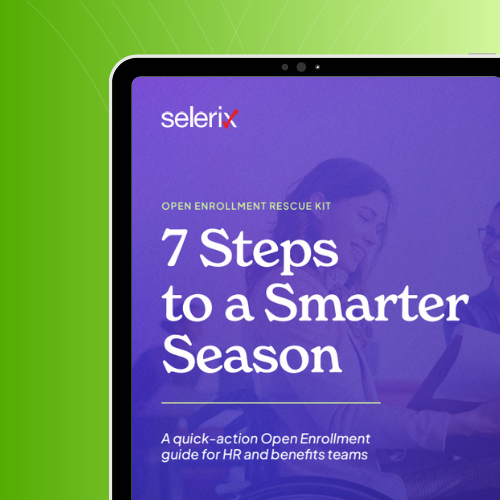
If you’re looking for practical ways to simplify communication, improve decision support, and help employees feel more confident during Open Enrollment, the OE Rescue Kit offers seven actionable strategies to help HR teams build a better enrollment experience from start to finish.


