
Why Open Enrollment in Education Feels Like a Group Project (And HR Is Doing All the Work)

Because managing benefits for a school system isn’t just complex—it’s a full academic year of moving parts.
If Open Enrollment (OE) in a typical organization feels like a sprint, Open Enrollment in education feels more like managing an entire school year—complete with shifting schedules, last-minute changes, and the occasional surprise pop quiz. And somehow, HR is the one expected to keep everything (and everyone) on track.
Between faculty, adjunct staff, seasonal employees, and administrative teams, education HR professionals aren’t just managing benefits—they’re navigating a constantly evolving system of eligibility rules, communication barriers, and compliance requirements. Add in the reality of academic calendars that rarely align with regulatory deadlines, and it’s easy to see why OE can feel overwhelming, even for the most experienced teams.
But here’s the good news: it doesn’t have to feel this way.
The Unique Enrollment Reality in Education (It’s Not Your Typical Workforce)
Unlike many industries where employee populations are relatively stable and predictable, education presents a much more dynamic environment. HR teams are balancing full-time faculty with consistent schedules alongside adjunct instructors whose hours fluctuate from semester to semester. Substitute teachers, seasonal staff, and administrative personnel all add additional layers of complexity—each with different eligibility thresholds, timelines, and expectations.
At the same time, compliance obligations—particularly around ACA reporting—operate on fixed federal timelines that don’t flex to accommodate academic calendars. This mismatch creates a constant tension between operational reality and regulatory requirements, leaving HR teams to bridge the gap.
The challenge is compounded by timing. Open Enrollment often lands during some of the busiest points in the academic year, when employees are focused on classrooms, students, and deadlines—not benefits decisions. And yet, those decisions still need to be made.
That’s where the risk begins to grow. Nearly half of employees already feel unprepared to make benefits decisions during Open Enrollment, and most spend less than an hour reviewing their options. In an education setting, where time and attention are even more limited, that window for engagement becomes even narrower.
Common Pain Points for Education HR Teams (a.k.a. The “Why Is This So Hard?” List)
“Wait… Are They Eligible?” (ACA + Variable Hour Complexity)
One of the most persistent challenges in education benefits administration is determining eligibility. Unlike traditional workforces with clearly defined full-time roles, education environments often rely on variable-hour employees whose schedules shift throughout the year. Adjunct faculty may take on additional courses, substitute teachers may work sporadically, and tracking hours accurately becomes a moving target.
This variability makes ACA compliance particularly complex. Misclassifying employees or missing eligibility thresholds doesn’t always cause immediate issues, but it can create downstream consequences that surface later in the form of penalties or IRS notices. Maintaining accurate, up-to-date data throughout the year is critical—but also time-consuming without the right processes in place.
For teams looking to better understand how these issues can escalate, this overview of what triggers IRS 226J letters offers helpful context: https://selerix.com/blog/what-triggers-226j/
Communication That Competes With… Everything
In education, communication isn’t just important—it’s everything. But it’s also one of the hardest things to get right.
Your employees are not sitting at desks checking email throughout the day. They’re teaching classes, meeting with students, grading assignments, and managing full schedules that leave little room for administrative tasks. That means benefits communication has to work significantly harder to capture attention and drive action.
A single email announcement simply isn’t enough. Effective communication in this environment requires a thoughtful, multi-channel approach that includes email, mobile-friendly tools, text messages, and even in-person touchpoints where possible. It also requires repetition, reinforcement, and simplicity—because even the most well-crafted message won’t land if it’s delivered at the wrong time or in the wrong format.
Employees themselves are signaling this need. Many say they would prefer to receive benefits information throughout the year, rather than only during the Open Enrollment window. For education HR teams, this is an opportunity to rethink communication as an ongoing strategy rather than a one-time event.
The “One Week Window” Problem
Another common challenge in education environments is the compressed timeline for Open Enrollment. OE is often scheduled around academic milestones—between semesters, during breaks, or in narrow windows where it can fit operationally. While this may be necessary, it also creates a high-pressure environment where both HR teams and employees are working against the clock.
As a result, even well-prepared teams can find themselves scrambling to manage last-minute questions, system issues, and incomplete enrollments. Employees, meanwhile, may rush through decisions simply to meet deadlines, increasing the likelihood of errors or regret later on.
This sense of urgency isn’t unique to education, but it is amplified by it. Open Enrollment often feels like a mad rush, even after months of preparation. When everything is condensed into a short timeframe, the margin for error becomes much smaller.
Why Employee Communication Matters Even More in Education
If there’s one factor that consistently separates a smooth Open Enrollment experience from a stressful one, it’s communication—and in education, its importance is even more pronounced.
Because employees aren’t always easily reachable, communication strategies must be intentional and adaptable. This means delivering information in ways that are accessible, digestible, and aligned with how employees actually work and interact throughout their day.
A helpful way to think about this is through the lens of teaching. Educators don’t introduce a complex concept once and expect immediate mastery. Instead, they reinforce key ideas over time, present information in multiple formats, and create opportunities for engagement and clarification.
Benefits communication should follow the same model. When employees are exposed to information gradually—through reminders, educational content, and accessible resources—they are far more likely to understand their options and make confident decisions when it matters most.
This kind of approach doesn’t just improve the employee experience; it also reduces the burden on HR teams by minimizing confusion, questions, and last-minute issues during Open Enrollment.
Why a Year-Round Strategy Matters More in Education Than Anywhere Else
One of the most effective ways to address these challenges is to shift from a reactive approach to a proactive, year-round strategy. Instead of treating Open Enrollment as a standalone event, leading organizations are integrating it into a continuous cycle of planning, communication, and improvement.
In education, this approach is especially valuable because it aligns more naturally with the rhythm of the academic year. By spreading key activities across months—rather than compressing them into weeks—HR teams can manage workloads more effectively while giving employees the time and information they need to make informed decisions.
Open Enrollment works best when it’s treated as an ongoing process, not a once-a-year event. This shift not only reduces stress but also creates a more consistent and supportive experience for everyone involved.
What a Smarter OE Approach Looks Like for Schools
A year-round strategy doesn’t have to be complicated. In fact, it often works best when it mirrors the natural phases of the academic calendar.
During the winter months, HR teams can focus on gathering feedback and evaluating what worked—and what didn’t—during the previous Open Enrollment cycle. Spring provides an opportunity to address compliance requirements, audit data, and ensure everything is aligned well before deadlines approach.
Summer, with its slightly more flexible pace, is an ideal time to build awareness and educate employees about their benefits. Short, targeted communications can help reinforce key concepts without overwhelming staff during busier periods.
By the time fall arrives and Open Enrollment begins, the groundwork has already been laid. Systems have been tested, communication has been consistent, and employees are better prepared to make decisions. Preparation at this stage allows HR teams to focus on support rather than troubleshooting, reducing disruptions and improving overall outcomes.
A Better Experience for Employees (And Fewer Headaches for HR)
When Open Enrollment is supported by a year-round strategy and strong communication, the benefits extend far beyond administrative efficiency. Employees feel more confident in their choices, participation rates improve, and the overall experience becomes less stressful for everyone involved.
This matters not only for operational success but also for employee satisfaction and retention. A poor enrollment experience can lead to frustration and even prompt employees to explore other opportunities. In a sector where retaining talent is already a priority, creating a positive benefits experience can play a meaningful role.
Final Bell: Stop Treating Open Enrollment Like a Fire Drill
Open Enrollment doesn’t have to feel like a last-minute scramble or a race against the clock. With the right approach—one that prioritizes planning, communication, and consistency—it can become a structured and predictable process that supports both HR teams and employees alike.
By aligning your strategy with the natural flow of the academic year and investing in communication that meets employees where they are, you can transform OE from a reactive challenge into a proactive advantage.
Build Your Open Enrollment Game Plan (Without the All-Nighters)
If Open Enrollment in education has ever felt like trying to manage a classroom during a fire drill, you’re not alone. The complexity is real—but so is the opportunity to improve it.
A year-round strategy, supported by thoughtful communication and proactive planning, can help you create a more manageable, effective, and engaging enrollment experience.
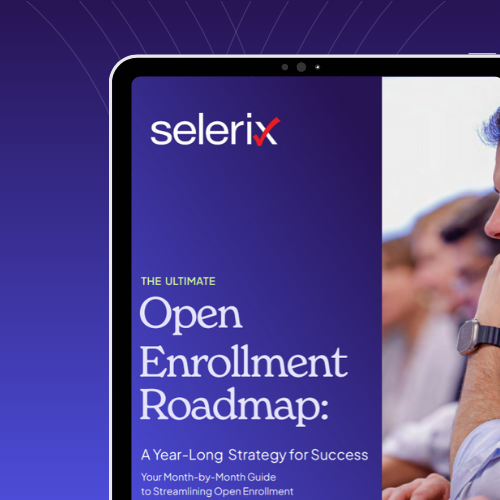
Download the full Open Enrollment Roadmap to see how a month-by-month approach can simplify planning, improve communication, and reduce compliance risk
