
How to Turn OE Lessons into 2026 Retention Wins

The most overlooked moment in Open Enrollment is where brokers build their strongest books
TL;DR
Open Enrollment may be over, but the most valuable work starts now. A short, structured post-OE review helps brokers identify which clients are draining time, which are quietly at risk, and which are ready to scale — and act accordingly. Brokers who turn OE lessons into clear next steps reduce chaos, strengthen renewals, and build a more predictable, retention-ready book of business going into 2026.
Open Enrollment Is Over. Don’t Waste What It Just Told You.
When Open Enrollment closes, most brokers do the same thing: exhale, move on, and start thinking about the next renewal cycle.
That’s understandable. OE is intense, compressed, and unforgiving. Everyone is relieved when it’s done. But here’s the problem: the moment OE ends is when you have the clearest view of how a benefits program is actually working — and most brokers let that insight slip away.
Open Enrollment reveals things no quarterly check-in or renewal deck ever will:
- Where employees struggled to understand their choices
- Where HR absorbed hidden effort to keep things moving
- Where success relied on structure — and where it relied on heroics
Once that window closes, those signals fade. The noise quiets. The urgency passes. And by the time renewal conversations start, brokers (and HR) are often working from memory, anecdotes, or assumptions, not evidence.
That’s a missed opportunity. Because what Open Enrollment just showed you is how sustainable this client relationship really is.
Think of Post-OE Insight as a Retention Lever, Not Extra Work
Open Enrollment isn’t just an enrollment event. It’s a stress test for:
- How clearly benefits are communicated
- How confident employees feel making decisions
- How much manual effort HR (and you) had to absorb
- How stable the program feels under pressure
OE outcomes matter more than even employers realize. Selerix research shows that more than 1 in 3 employees regret a benefits decision they made during Open Enrollment — and nearly 7 in 10 spend an hour or less choosing benefits for the entire year. When decisions are rushed or unclear, confusion doesn’t disappear after OE ends. It shows up later as questions, rework, dissatisfaction, and erosion of trust.
For brokers, that downstream impact is also real. The rougher OE goes, the more likely your team will have to deal with a year filled with:
- More service noise
- More reactive support
- Harder renewal conversations
A structured post-OE review may seem like more work than you want to do after a busy Open Enrollment period, but we promise this isn’t about adding process. It’s about deciding where your time and expertise will actually pay off in the coming year. It’s how OE stops being a fire drill, and starts becoming a strategic asset.
Done well, it helps brokers:
- Prioritize the clients that truly need intervention
- Avoid over-servicing accounts that don’t
- Turn one-time OE effort into year-round stability
- Walk into renewals with clarity instead of cleanup
Two Perspectives, One Clear Picture of OE
At Selerix, we see the strongest brokers using a simple but powerful post-OE framework built around two inputs. Each captures a different truth — and together, they tell you what to do next.
1. An Employer Pulse Check
This is the client’s perspective, captured quickly while OE is still fresh.
The Pulse Check is intentionally lightweight. It doesn’t ask clients to diagnose root causes or assign blame. Instead, it focuses on signals:
- How smooth OE felt overall
- Whether employee confidence seemed strong or shaky
- How effective communications were
- How much effort HR had to absorb
- Whether OE increased or reduced compliance confidence
Because the questions are mostly quantitative and experience-based, clients can respond honestly without feeling defensive. The result is a clear snapshot of how OE functioned — not just whether it finished on time.
That perspective matters. It’s often what shapes renewal sentiment, even if the operational details are forgotten.
2. A Post-Mortem from the Broker
This is where brokers shift from execution mode into advisory mode.
The Worksheet is designed for you — not the client. It helps you synthesize:
- What the Pulse Check revealed
- What you observed firsthand
- Patterns you’re seeing across similar accounts
Instead of reacting to every issue equally, the Worksheet helps you separate:
- Structural problems from situational ones
- Avoidable work from necessary effort
- Fragile success from repeatable success
Used together, these two tools help brokers move the conversation from “How hard was OE?” to “How do we make next year easier — and what level of support actually makes sense?”
And that’s where retention wins start to compound.
What Open Enrollment Really Reveals (If You Know How to Read It)
Once you step back from execution and look at Open Enrollment as a whole, a few truths become hard to ignore.
First: Completion is not the same as confidence.
Most enrollments technically finish on time. That alone doesn’t tell you whether employees understood what they chose, whether HR felt supported, or whether the experience reduced or created downstream risk. In fact, Selerix research consistently shows that a significant share of employees leave OE unsure or second-guessing their decisions, even when enrollment itself appears “successful.”
Second: Effort is a signal.
When Open Enrollment works well, HR effort feels manageable and predictable. When it doesn’t, effort spikes — often quietly. Extra meetings, last-minute reminders, one-off explanations, manual fixes, and repeated employee questions are all signs that structure isn’t doing enough of the work. Over time, those patterns compound into burnout for HR teams and noise for brokers.
Third: Communication effectiveness matters more than volume.
Many organizations communicate frequently during OE, but frequency alone doesn’t equal clarity. When employees rush decisions or repeatedly ask the same questions, it’s often a sign that messages landed late, lacked relevance, or didn’t support real decision-making. That distinction matters because it determines whether confusion will resurface next year.
For brokers, these signals are invaluable. They tell you not just what happened, but also what is likely to happen again if nothing changes.
The Four OE Patterns Every Broker Is Managing
When brokers review post-OE Pulse Check results alongside their own observations, most clients fall into one of four broad patterns. They won’t fit perfectly — but the dominant pattern is usually clear.
- Firefighting. These are the high effort, high friction, and constant intervention define the experience. HR feels stretched, employee confusion is frequent, and success relies heavily on heroic effort from people rather than structure. These are the most expensive OEs for brokers. They consume time, increase risk, and limit how much a book can grow without burning out.
- Managed, but fragile. Enrollment completes on time for these accounts, issues are handled, and nothing explodes — but only because HR and brokers step in repeatedly. The system works, but just barely. These accounts often feel “fine” to clients, even though the underlying experience isn’t durable. For brokers, this is a critical inflection point: small structural changes here can prevent much bigger problems later.
- Stable but inefficient. These are low-drama enrollments where HR feels capable and employees mostly get through the process — yet more manual work exists than necessary. These accounts often hide the best opportunities for brokers to reduce lift, introduce automation, and improve efficiency without disrupting what’s already working.
- Smooth and predictable. Brokers love these customers. Communication is clear, employee confidence is high, and HR effort low. These are the outcomes brokers want more of — not just because they’re easier to manage, but because they create renewals you can trust and references you can build from.
Understanding which pattern you’re dealing with is what allows you to move from reactive service to intentional advisory work.
Get Ahead of Renewals
By the time renewal conversations begin, it’s really too late to reconstruct what Open Enrollment actually felt like. Emotions have cooled. Details are fuzzy. Impressions have crystallized. Conversations drift toward pricing.
Post-OE insight can help change that dynamic and instead focus on value.
When brokers can point to clear signals — effort levels, confidence indicators, communication effectiveness — renewal discussions become calmer and more grounded. Instead of relitigating pain, you’re outlining priorities. Instead of defending past decisions, you’re guiding next steps.
And just as importantly, you’re not treating every client the same. And that’s how OE lessons turn into real wins for 2026.
Turning Insight into a Stronger, More Predictable Book
When you consistently review OE outcomes across your book, patterns emerge quickly. You start to see which clients need structural changes, which need lighter tuning, and which are already operating from a place of stability. That visibility changes how you allocate your time, how you prepare for renewals, and how confidently you can grow without adding strain.
Just as importantly, it changes how clients experience your advisory role.
Instead of showing up at renewal with a backward-looking recap, you arrive with a clear story of what OE revealed and what matters most going forward. Conversations become more focused. Recommendations feel grounded rather than reactive. And clients feel supported — not surprised — by what you’re suggesting.
You Don’t Have to Act on These Insights Alone
Interpreting OE signals across a book of business takes experience — and perspective. That’s why many brokers review their post-OE findings with their Selerix team.
That collaboration helps brokers:
- Sense-check what they’re seeing across industries and client types
- Separate situational noise from structural issues
- Identify where automation, better decision support, or different timing could materially reduce effort
- Pressure-test changes before the next OE cycle begins
From “How Hard Was OE?” to “How Do We Make It Easier Next Time?”
The brokers who consistently turn those clues into action aren’t doing more work — they’re focusing their energy where it matters, strengthening renewals before they’re at risk, and building books that scale without constant triage.
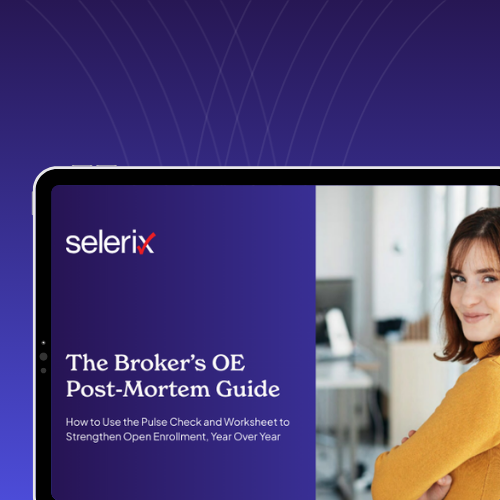
If you’d like help capturing and acting on what this OE revealed, our Broker’s OE Post-Mortem Guide walks through the full process — including the Employer Pulse Check and Broker Worksheet — step by step.
Let’s make the next Open Enrollment easier — and the one after that even better.


